
Hospital Software That Runs The Whole Hospital As One System
A hospital information management system where registration, IPD, operation theatre, emergency, laboratory, pharmacy, billing, stores and MIS share one unified patient record — deployable on cloud, on-premise or hybrid.
Get a Free Hospital Software Demo
Managing a clinic shouldn't feel this complicated
Disconnected patient records delay care
Manual scheduling and double bookings cause inefficiency
Tasks take time away from patients
Limited visibility into daily operations
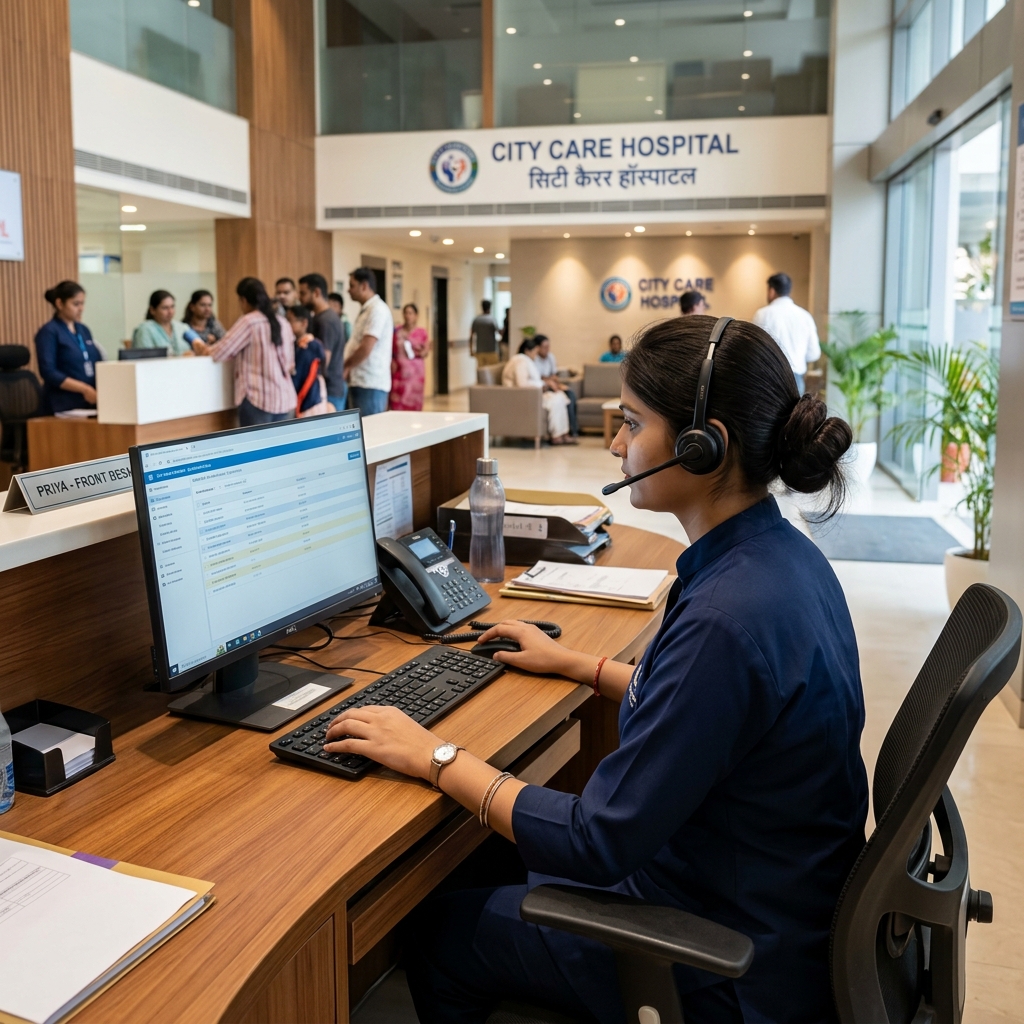
Every Module Inside MBBS Prime HIMS
Clinical and departmental systems that hospitals usually buy separately are modules here - sharing one patient record, one login and one support contract.
Registration & Patient Identity
Single patient identity with UHID & ABHA verification, reused by every department for life.
Appointments & OPD Desk
Online booking, SMS reminders and live token queues across doctors and specialty departments.
EMR & Clinical Records
Speciality-tuned clinical notes, ICD-10 coding and e-prescriptions at the point of care.
EHR & Longitudinal History
One patient medical record across departments, branches and the ABDM digital healthcare ecosystem.
IPD, Wards & Bed Allocation
Admissions, bed transfers, live occupancy matrix, nursing care notes and discharge planning.
Operation Theatre (OT) Scheduling
Theatre slots, surgical team rosters, anesthesia records, and implant traceability.
Emergency & Casualty Triage
Rapid emergency registration, casualty triage logging, and instant IPD bed admission.
Pathology Laboratory (LIMS)
Test orders, sample vial barcoding, machine result sync, QC and PDF reports to patient record.
Radiology (RIS / PACS)
Diagnostic DICOM worklists, in-record radiological image viewing and structured reporting.
Pharmacy & Retail Store ERP
Ward indents, unit-dose supply, batch-wise expiry alerts, vendor indents, and GST POS billing.
Billing, TPA & Insurance Claims
OPD/IPD billing, package tariffs, PMJAY scheme claims, and cashless TPA insurance desks.
Teleconsultation & Video Desk
HD video consults with clinical notes and e-prescriptions generated on the same screen.
HIMS Software Features That Run The Institution
The operational and administrative layer that turns connected departments into a hospital you can actually manage.
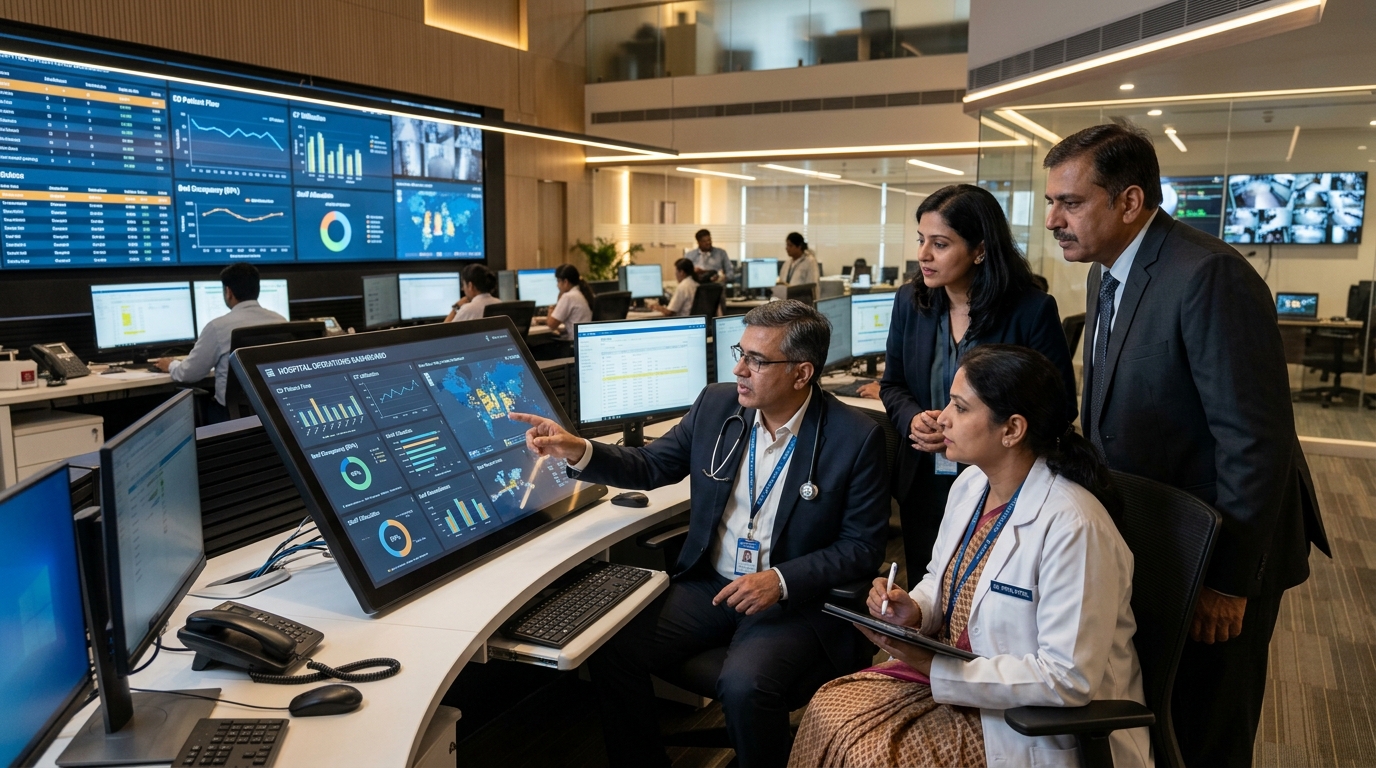
Real-Time Visibility Across Admissions, Wards, OT, Pharmacy & Revenue
Bed & Ward Management
Live occupancy by ward, class and category, with admissions, transfers and discharge planning visible to every desk that needs them.
Operation Theatre Scheduling
Theatre slots, surgical teams and anesthesia records in one calendar, with consumables and implants tracked against each procedure.
IPD Billing, TPA & Insurance
Charges accumulate on the patient's account as care happens. Package billing, TPA workflows, PMJAY and scheme claims with document tracking.
Central Stores & Procurement
Departmental indents, purchase orders, vendor rate contracts, goods receiving and consumption analysis across every store.
Biomedical & Asset Management
Equipment registers with AMC dates, calibration schedules, breakdown logs and downtime reports - the records accreditation assessors ask for.
HR, Payroll & Duty Rosters
Staff records, shift rosters across departments, attendance, leave and payroll - with credentials and competency files kept current.
MIS Dashboards & Analytics
Occupancy, ALOS, department-wise revenue and margin, doctor productivity, claim ageing and receivables - refreshed from live data, not month-end files.
Multi-Facility Control
Each hospital keeps its own tariffs, formulary and departments while group management sees consolidated performance across every location.
NABH Evidence & Quality
Consent forms, incident reporting, clinical audits, quality indicators and equipment logs captured in daily workflow, exportable for assessment.
Who Runs On A Hospital Information Management System
When a facility has more departments than one person can hold in their head, coordination becomes the product.
Multi-Specialty Hospitals
Fifty beds upward, where OPD, wards, theatre, diagnostics and billing all need the same patient record at the same moment.
Hospital Chains & Groups
Several facilities under one management, each with its own tariffs and departments, reporting into one consolidated view.
Government & Trust Hospitals
Tender-driven procurement with data-residency conditions, scheme billing and on-premise deployment requirements.
Medical Colleges & Teaching Hospitals
Clinical service plus academic load - resident rosters, teaching records and the reporting statutory bodies expect.
Super-Specialty & Tertiary Care
High-acuity units where theatre scheduling, ICU workflows and implant or consumable tracking decide both outcomes and margins.
Hospitals Leaving A Legacy System
Facilities on ageing on-premise software or a patchwork of departmental tools, needing migration without stopping admissions.
Architecture, Integrations, Security & Support
The section your IT head and purchase committee will actually read - and the answers most tender technical sheets ask for.
Deployment & Architecture
Interoperability & Integrations
Security & Data Governance
Implementation & Support
What HIMS Software Does For A Hospital
A hospital information management system is the single platform a hospital runs on: patients are registered once, and that record travels through OPD, wards, theatre, laboratory, pharmacy and billing without being retyped at any desk. Departments stop reconciling their own registers, and management stops assembling reports from six sources.
The practical difference shows up in three places: Revenue leakage falls because charges are captured where care happens instead of being remembered at discharge. Accreditation stops being a fire drill, because the documentation assessors ask for is produced by daily work. And a chain can open a new facility without buying a new system.
Nothing forgotten or left to reconcile at final discharge bill.
Help Center
Frequently Asked Questions
Ready to Modernize Your Healthcare Operations?
Experience the unified performance of MBBS Prime. Access your operational desk or request a demo below.